mirror of
https://codeberg.org/Freedium-cfd/web.git
synced 2026-03-11 09:04:37 +00:00

107 lines
3.6 KiB
Markdown
107 lines
3.6 KiB
Markdown
<p align="center"><a href="https://freedium.cfd" target="_blank"><img src="https://avatars.githubusercontent.com/u/142643505?s=200&v=4" width="20%"></a></p>
|
|
|
|
<h1 align="center">Freedium: Your paywall breakthrough for Medium!</h1>
|
|
|
|
<a href="https://www.patreon.com/Freedium">
|
|
<img width="200px" height="50px" alt="Become a Patron" src="https://github.com/elsiehupp/patron-buttons/blob/master/svg/become_a_patron_4x1_black_logo_white_text_on_coral.svg?raw=True">
|
|
</a>
|
|
|
|
## Stack:
|
|
|
|
- Backend:
|
|
- language: Python 3.9+
|
|
- framework: Unicorn, FastAPI
|
|
- Frontend:
|
|
- framework: Tailwinds CSS v3, Jinja2
|
|
- monitoring: Sentry
|
|
- Database:
|
|
- PostgreSQL, Dragonfly (Redis and Memcached compatible key-value database)
|
|
- Utils:
|
|
- Caddy, Docker, Docker Compose, Cloudflare WARP proxy (wgcf)
|
|
|
|
## Project configuration:
|
|
|
|
There is three (3) docker-compose profiles:
|
|
|
|
- `min` - without 2 Cluster of Cloudflare WARP proxy, HAProxy proxy balancer, Plausible, Grafana.
|
|
- `local` - based on `min`, but with `freedium.local` exposed hostname, both 80 and 443 ports are exposed, with self-signed TLS certificate.
|
|
- `prod` - with all services for production.
|
|
|
|
### Requirements:
|
|
|
|
- Docker, Docker Compose, last version is preferred.
|
|
- Linux, preferably rolling release. We can't guarantee that Freedium instance will work on other OS. Tested on Ubuntu 22.04 and Fedora 39.
|
|
- git
|
|
- Preferably, fresh and clean brain.
|
|
|
|
### Local run:
|
|
|
|
To configure your Freedium instance, follow these steps:
|
|
|
|
1. Clone the repository:
|
|
|
|
```
|
|
git clone https://codeberg.org/Freedium-cfd/web/ ./freedium-web --depth 1
|
|
cd ./freedium-web
|
|
```
|
|
|
|
2. Create and configure the environment file:
|
|
|
|
```
|
|
cp .env_template .env
|
|
```
|
|
|
|
Open the `.env` file and adjust the values as needed for your setup.
|
|
|
|
3. Set up the Docker network:
|
|
|
|
```
|
|
sudo docker network create caddy_net
|
|
```
|
|
|
|
4. (Optional) Change your hosts file:
|
|
|
|
```
|
|
sudo nano /etc/hosts
|
|
# or
|
|
vim /etc/hosts
|
|
# and when you are closed vim, type `:w !sudo tee %` to save file without executing vim in root mode
|
|
```
|
|
|
|
Add the following line:
|
|
|
|
```
|
|
127.0.0.1 freedium.local
|
|
```
|
|
|
|
5. Start the Freedium services (`min` profile):
|
|
|
|
```
|
|
sudo docker compose --profile local -f ./docker-compose/docker-compose.yml up
|
|
```
|
|
|
|
Stopping the services:
|
|
|
|
```
|
|
sudo docker compose --profile local -f ./docker-compose/docker-compose.yml down
|
|
```
|
|
|
|
And now you can access local instance of Freedium by opening browser and type `https://freedium.local` or `http://localhost:6752` if you ignored 4th step. There is would be a warning about insecure connection, because we use self-signed TLS certificate. Ignore it.
|
|
|
|
### Production run:
|
|
|
|
All production services are running on `prod` profile. If you use Dockerized reverse proxy, you can specify network `caddy_freedium_net` with `external: true` option in networks section of your reverse proxy container. Specify `caddy_freedium` hostname with port `6752` (or `6753` for Plausible) in your reverse proxy configuration.
|
|
|
|
As alternative, you can directly change docker-compose configurations to use your reverse proxy. See `docker-compose` and `caddy` folders for more details.
|
|
|
|
## Roadmap
|
|
|
|
- [ ] Speed up parser logic
|
|
- [ ] Parse articles directly to Markdown
|
|
- [ ] Add more services than just a Medium
|
|
- [ ] Rewrite frontend to Svelte
|
|
- [ ] Integrate Grafana/Prometheus/Plausible to monitor our services
|
|
- [ ] Translate posts to different languages using `translatepy` library
|
|
- [ ] AI-powered summary of posts
|
|
|
|
[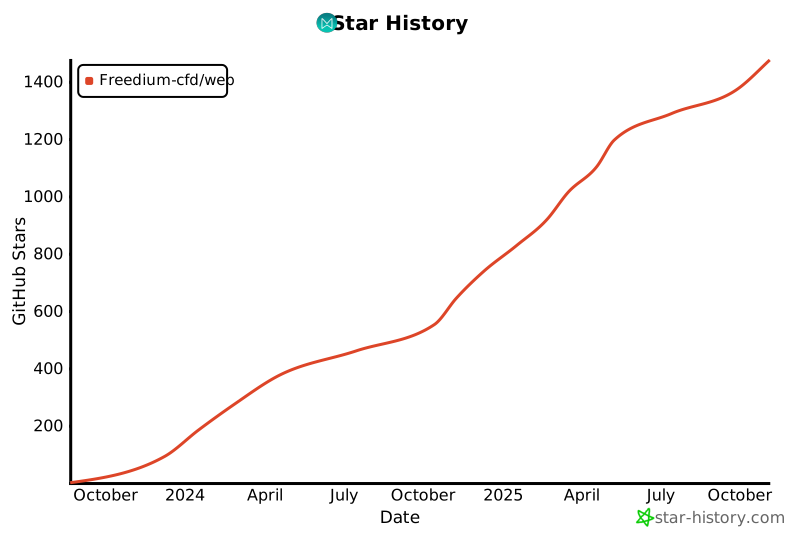](https://star-history.com/#Freedium-cfd/web&Date)
|